
We have been evaluated. Hundreds of times.
Buyers from the Middle East, Africa, and Southeast Asia send inquiries, request samples, check our paperwork, compare us against three other suppliers, and then make a decision. Some come back with an order. Others move on. After 25 years on this side of that conversation, we know exactly what separates a supplier worth trusting from one that will cause problems six months into a contract.
This piece is written from that side. We are Barkat Rice, a basmati manufacturer and exporter based in Surat, Gujarat, operating under Deepak Overseas since 1989. We supply 1121 Sella and 1121 Steam Basmati under our own brand across 5+ countries through a network of 100+ distributors.
We are telling you what to actually check, why it matters, and what honest answers look like. If our competitors read this and use it to sharpen their pitch, that is fine. The buyers who take this seriously are the ones worth working with.
The Problem With Most Supplier Evaluation Advice
Most guidance on this topic gives buyers a generic checklist: verify certifications, request a sample, check export history, confirm MOQ. This is correct. It is also incomplete in ways that cost buyers real money.
The gap is specificity. A supplier can produce an ISO certificate that expired six months ago. They can send a sample batch that has been hand-sorted to look exceptional. They can show you an export history that includes one shipment to Dubai and 40 local ones. None of this disqualifies them on a checklist, but a buyer who knows what to look for would catch every one of these.
What follows is the specific version.
1. Grain Specification Verification: The Number That Actually Matters
Every Indian basmati rice supplier will tell you they supply premium quality. The claim costs nothing. The grain length measurement does.
1121 Basmati is India’s most exported variety, and buyers typically ask for it without understanding that the category covers a meaningful range. The raw grain length before cooking and the elongation ratio after cooking together determine whether the rice actually performs in the end market.
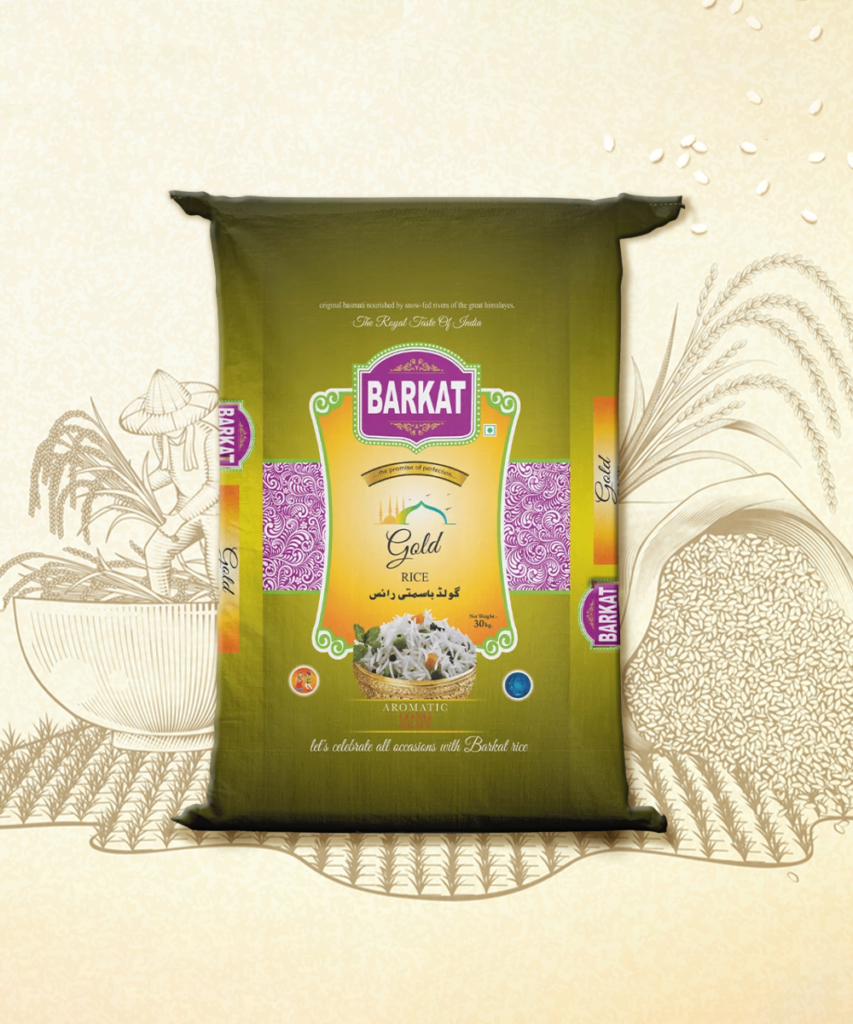
At Barkat, our Gold Rice (1121 Sella) has a grain length of 7.25mm. Our Magic Rice (1121 Sella) runs to 8.4mm. These are different products, priced differently, suited to different markets. A buyer sourcing for a restaurant chain in Dubai where plate presentation matters will have different requirements than one supplying a wholesale market in Nairobi where value and volume dominate.
Before you accept any specification sheet from a supplier, ask them to confirm:
- Raw grain length (pre-cooking), ideally verified by a third-party laboratory
- Broken grain percentage (what is acceptable depends on your end market, but anything above 2-3% in premium export rice is worth questioning)
- Moisture content at the time of packaging
- Whether the batch is new crop or aged, and if aged, for how long
Aging matters more than most buyers realise. Freshly milled basmati has higher moisture and tends to stick when cooked. Properly aged rice, typically 12 to 24 months, cooks longer and separates cleanly. For Middle Eastern and Gulf markets where biryani and mandi are the primary use cases, aged rice is the standard expectation. A supplier who gives vague answers on crop year is running inventory without the discipline a reliable export operation requires.
2. The Sella vs Steam Distinction You Cannot Ignore
Buyers sometimes treat 1121 Sella and 1121 Steam as variations of the same product. They are processed differently, behave differently when cooked, and serve different market segments.
Sella rice is parboiled before milling. The grain turns a pale golden colour. It holds its shape during cooking, elongates significantly, and stays separate. It is the dominant choice for biryani, for catering operations that cook in large batches, and for any market where the rice will sit under a hot lamp before service. Our 1121 Sella makes up the majority of what we export.
Steam rice is processed differently. The grain retains a whiter appearance closer to raw milled rice. It cooks faster, has a more delicate texture, and suits markets where consumers prefer a lighter, less chewy grain. Some buyers specifically need Steam for retail blends or for markets in East Africa and parts of South Asia where Sella’s firmer bite is considered too tough.
When you contact a supplier, specify which processing type you need and ask for specifications for each separately. A supplier who responds to “1121 Sella” with “yes we have that” without asking about your end market, volume, or pack format is missing the basic due diligence a serious exporter runs automatically. That inattentiveness will carry through the entire relationship.
3. Documentation and Compliance: What to Actually Request
The documents required for international shipment are mandatory and fixed. Any supplier telling you they can work something out on documentation is a supplier to walk away from.
For an Indian basmati rice exporter, the core documentation package for a standard international shipment includes:
APEDA Registration. The Agricultural and Processed Food Products Export Development Authority registers all legitimate rice exporters in India. This is mandatory, verifiable online, and should be provided upfront without you having to ask.
Phytosanitary Certificate. Issued by the Plant Quarantine Authority of India, this certifies the rice is free from plant pests and diseases. Required by virtually every importing country.
Fumigation Certificate. Confirms the shipment has been treated to prevent insect infestation during transit. Destination countries including the UAE and Saudi Arabia will reject shipments without this.
Certificate of Origin. Required for customs clearance in the destination country. For buyers claiming preferential trade rates under bilateral agreements, this document is essential.
Bill of Lading and Commercial Invoice. Standard for all shipments. These should be accurate to the product description, weight, and value stated in your purchase agreement.
Lab Test Report. A credible supplier should be able to provide a recent laboratory analysis from a NABL-accredited facility confirming grain parameters and absence of prohibited pesticide residues. The EU has specific maximum residue limits that are among the strictest globally. If you are supplying into European markets, confirm the test report covers the EU pesticide residue list.
Ask for specimen copies of all these documents before placing an order. A supplier who has actually exported will have these ready. One who has mostly handled domestic supply will struggle.
4. Evaluating a Sample: What You Are Actually Testing
Requesting a sample is standard. Knowing how to evaluate it properly is rarer.
When you receive a sample, the visual check covers colour uniformity, grain length consistency, and visible broken grain percentage. Do this with plain light and on a flat surface. But the more important test is a cook test.
Cook a measured quantity using the same method your end customers will use. In a hotel kitchen, that means a dum-cooked biryani method. In a mass-catering facility, it may mean an industrial rice cooker. The grain should elongate to at least double its raw length, should stay separate, and should hold its texture for at least 20 to 30 minutes after cooking without turning mushy.
For Sella basmati, the cooked grain should show a clean white interior without the translucency that indicates underprocessing. For Steam basmati, the texture should be lighter and the cooking time shorter.
Ask the supplier what cooking method they recommend. A supplier who knows their product will have a specific answer. One who says “just cook it normally” is working from theory.
One caution on samples. Samples sent for evaluation are sometimes packed from a premium-selected batch that diverges from the actual production quality you will receive at scale. This is a known problem across the industry. To mitigate it, request a bulk sample of at least 5 to 10 kilograms rather than a small pouch, and ask for it to be taken from the batch that would actually ship to you, with the batch lot number documented on the packaging. Then check that lot number against the shipment documentation when the order arrives.
5. Pricing Transparency and What the Numbers Actually Mean
Basmati rice pricing in the export market is quoted in FOB (Free on Board) or CIF (Cost, Insurance, and Freight) terms. FOB pricing covers the supplier’s cost to deliver the goods to the port of origin. CIF adds freight and insurance to the destination port.
For buyers new to Indian rice sourcing, comparing prices across suppliers requires putting everything on the same basis. A supplier quoting FOB Mundra at one price and another quoting CIF Dubai at a higher figure may actually be giving you the same or worse deal once you strip out the freight.
Price fluctuations in basmati are seasonal and real. The harvest season for basmati paddy runs roughly from October through March. New crop rice enters the market from November onwards. During the off-season, when mills are working through stored inventory, prices typically rise as the freshest stock gets depleted. This is normal. A supplier offering unusually low prices during the off-season is either selling older stock they need to move or quoting on specifications they cannot actually deliver.
We give buyers straightforward pricing and say directly when rates are firm and when there is room depending on volume. Quoting low to win an inquiry and adjusting on the final invoice is the fastest way to end a relationship. We have no interest in that approach.
6. Supply Consistency: The Question Most Buyers Ask Too Late
The most common complaint we hear from buyers who have been burned by a supplier concerns quality on the second or third shipment, where the first was fine. Consistency is the harder problem.
Supply consistency depends on a supplier’s actual manufacturing capacity and inventory management. Ask:
How many metric tons per month can they supply from their own processing facility? A supplier who is sourcing from third-party millers and reprocessing can deliver to you, but their ability to maintain consistent grain specifications across batches is lower than one who controls the milling process.
Do they have storage capacity adequate for aging? Aging rice requires warehouse space measured in thousands of metric tons. A supplier operating out of a small facility cannot age stock in meaningful volumes.
What is their network for distribution? We supply through 100+ distributors across India and international markets. That network runs both ways as a sales channel and as a feedback mechanism. It gives us visibility into how the product is received and performing in real conditions, which feeds back into how we manage quality at the production stage.
Ask for references from buyers in markets similar to yours. A supplier who has been consistently supplying a wholesale market in the UAE for three or more years has demonstrated something a new entrant cannot.
7. Brand Integrity: Supplying Under Whose Name
This matters more in some markets than others, but it is worth understanding upfront.
Barkat Rice supplies exclusively under the Barkat brand. Private label is outside our model. If you want to distribute under your own label, we will tell you that directly upfront and save both parties the time. There are suppliers in India who accommodate private labelling, and that is a legitimate business model. Our choice to supply only under our own brand reflects a decision about where we want to put our quality commitment and our reputation.
For a buyer, the brand question has a different implication. If you are sourcing branded rice from an Indian supplier for distribution in your market, the supplier’s brand credibility in your market matters. A brand that your customers cannot recognise offers you no positioning advantage. Either you are selecting a supplier whose brand has built recognition in your market, or you are effectively buying a commodity and branding will come from your own distribution and marketing effort.
We have invested 25 years building recognition for the Barkat name across South Gujarat and our export markets. When a distributor in an international market stocks Barkat, they are stocking a name that carries history. That is a different conversation than sourcing anonymous product.
8. Logistics and Port of Export
Indian basmati rice shipments move predominantly through Mundra port in Gujarat and JNPT (Jawaharlal Nehru Port) in Maharashtra. Kandla port also handles significant rice export volumes.
For buyers in the Middle East, transit time from Mundra is typically 10 to 15 days by sea. For buyers in East Africa, expect 18 to 25 days. For Europe, 25 to 35 days depending on routing.
A supplier based in Gujarat, as we are, has a natural logistics advantage for shipments through Mundra. The road distance from Surat to Mundra is roughly 300 kilometres, which affects the inland freight component of the overall cost and also affects how much temperature and humidity variation the product experiences before loading.
Ask your supplier which port they typically export from and what their average transit time to your destination has been over the past 12 months. This is a question with a specific answer. If the answer is vague, follow up.
What We Look Like as a Supplier
We have said what to check. You should apply the same check to us.
Barkat Rice is part of Deepak Overseas, established in 1989. The Barkat brand was launched in 2001. We manufacture and export 1121 Sella and 1121 Steam Basmati Rice from Surat, Gujarat. Our distribution network spans 100+ distributors, 5+ countries, 7 states within India, and 50+ cities. We supply only under the Barkat brand.
If you want to evaluate us, request our APEDA registration, ask for a bulk sample with a documented lot number, ask for our most recent laboratory test report from a NABL-accredited facility, and ask for a reference from a buyer in a market similar to yours. We will provide all of this.
Every inquiry that becomes a well-informed order is worth more to us than a fast order that turns into 12 months of complaints.
FAQs: Sourcing Basmati Rice from India
Q1: What certifications should a basmati rice supplier in India hold for international export?
Any Indian basmati rice supplier exporting internationally must hold APEDA registration, which is verifiable online through the APEDA portal. Beyond that, look for a phytosanitary certificate issued per shipment by India’s Plant Quarantine Authority, a fumigation certificate, and a certificate of origin. For buyers supplying into EU markets, also confirm the supplier can provide a laboratory test report from a NABL-accredited facility showing compliance with EU pesticide maximum residue limits. FSSAI registration covers domestic food safety and is a baseline indicator of facility compliance.
Q2: What is the difference between 1121 Sella and 1121 Steam Basmati rice for export?
1121 Sella is parboiled before milling. The grain takes on a pale golden colour, elongates significantly during cooking, and holds its shape without clumping, making it the preferred choice for biryani, catering, and foodservice supply where the rice sits after cooking. 1121 Steam is processed differently, retaining a whiter appearance closer to raw milled rice. It cooks faster and has a lighter, more delicate texture. Sella accounts for the majority of Indian basmati export volume, particularly to the Middle East and Gulf markets. Steam is more common in retail blends and markets where consumers prefer a softer grain.
Q3: How do you verify that an Indian basmati rice exporter is legitimate?
Check the supplier’s APEDA registration number directly on the APEDA portal at apeda.gov.in. A registered exporter will appear in the database with their registration details. Beyond this, request specimen copies of their standard export documentation including phytosanitary certificates and fumigation certificates from previous shipments. Ask for the lot number on any sample sent to you, then cross-check it against the shipment documentation if you place an order. Ask for buyer references in markets similar to yours, and contact them. A supplier with genuine export history will have these available without hesitation.
Q4: What is the minimum order quantity for bulk basmati rice from Indian suppliers?
Most Indian basmati rice exporters set the minimum order at one 20-foot container, which holds approximately 25 to 27 metric tons depending on packaging format and bag weight. Some exporters work with smaller quantities for first orders or sample shipments, but standard export economics typically require at least one container to make the logistics viable for both sides. Buyers sourcing for regional wholesale distribution or larger retail supply chains usually order in 40-foot containers, which hold roughly 25 to 28 metric tons for heavier bag formats.
Q5: How long does basmati rice need to be aged before export, and why does it matter?
Premium basmati rice for export is typically aged 12 to 24 months after milling. Freshly milled basmati has higher moisture content and a tendency to turn sticky during cooking. Proper aging reduces moisture, concentrates the aroma compounds, and produces the elongation and grain separation that export markets expect. Rice aged for 12 to 24 months commands a price premium over new crop rice because the cooking performance is measurably better. When evaluating a supplier, ask for the crop year of the batch they are quoting. A supplier who gives a vague answer is working from mixed or unaged inventory.
Q6: What packaging formats do Indian basmati rice suppliers offer for wholesale distribution?
Standard packaging formats for wholesale distribution from Indian basmati suppliers include 5kg, 10kg, 25kg, and 50kg bags. Retail distribution typically uses 5kg and 10kg formats. Wholesale and bulk buyers generally work with 25kg or 50kg bags for cost efficiency in storage and handling. Some suppliers also offer 1kg retail packs for branded retail distribution. At Barkat, we supply in 1kg, 5kg, 10kg, and 30kg formats. The right format depends on your distribution channel, storage capacity, and the retail or foodservice market you are supplying.
Q7: Which Indian ports are used for basmati rice export, and how long does shipping take?
Basmati rice exports from India move primarily through Mundra port in Gujarat, JNPT in Maharashtra, and Kandla port in Gujarat. For buyers in the UAE and broader Gulf region, transit time from Mundra is typically 10 to 15 days by sea. East African destinations take 18 to 25 days. European ports are 25 to 35 days depending on routing and transshipment. Suppliers based in Gujarat have a logistics proximity advantage for Mundra shipments, which reduces inland freight cost and the time the product spends in transit before loading.
Q8: How do you evaluate a basmati rice sample before placing a bulk order?
A proper sample evaluation involves two stages. First, a visual check for colour uniformity, grain length consistency, and broken grain percentage, done on a flat surface under plain light. Second, a cook test using the same method your end customers will use, whether that is dum-cooking for biryani supply or an industrial cooker for catering operations. The cooked grain should elongate to at least double its raw length, stay separate, and hold texture for 20 to 30 minutes after cooking. Always request a bulk sample of at least 5 to 10 kilograms rather than a small pouch, and ask for the batch lot number to be documented on the packaging so you can verify it against the actual shipment documentation later.
Where to Start
If you are in the early stages of evaluating Indian basmati rice suppliers, start with these five questions:
What is the exact grain length and processing type of the batch you would ship to me, and can you provide a third-party lab report confirming this?
What crop year is your current inventory from, and how long has it been aged?
Can you provide your APEDA registration number so I can verify it?
What is your current FOB price from your port of export, and what are your MOQ requirements?
Can you provide contact information for a buyer in a market similar to mine who has received at least three shipments from you?
A supplier with real export experience will have immediate answers to all five. The gaps in their response will tell you more than the answers.