
Spend enough time in a commercial kitchen producing biryani at scale, and you stop thinking about rice as an ingredient. You start thinking about it as infrastructure.
A beautiful spice blend, properly marinated protein, correctly rendered fat. All of it collapses the moment the rice lets you down. Grains that turn mushy under dum. A sticky, starchy pot where every grain has bonded with its neighbour. Broken pieces that overcook in 8 minutes while the whole grains need 15.
This guide is written for chefs, F&B procurement managers, catering buyers, and restaurant owners who take biryani seriously enough to understand what they are buying before the first order arrives. It covers the grain science, the processing decisions, the regional style requirements, the correct cooking method, and the questions every serious buyer should put to any supplier before signing a supply agreement.
Rice Varieties Used in Biryani: A Comparison
Basmati is the standard, but it helps to understand why other varieties fall short before committing to it.
| Rice Variety | Grain Length (Raw) | Aroma | Elongation Ratio | Suited for Biryani |
| 1121 Basmati | 7.2mm+ | Strong, nutty | 2.0 or above | Yes, the gold standard |
| Traditional Basmati | 6.5 to 7.0mm | Moderate | 1.7 to 1.9 | Yes, for everyday use |
| Sona Masoori | 5.5 to 6.0mm | Mild | 1.3 to 1.5 | No, insufficient elongation |
| Seeraga Samba | 4.5 to 5.0mm | Strong, earthy | Low | Only for South Indian style biryani |
| Jasmine | 6.5 to 7.0mm | Sweet, floral | Low | No, sticky texture |
| Jeerakasala | 4.0 to 4.5mm | Intense | Low | Only for Kerala Malabar biryani |
The short answer: for north Indian, Hyderabadi, Lucknowi, and most commercial biryani operations in India, long grain 1121 Basmati is the correct choice. Seeraga Samba and Jeerakasala are regional grains suited specifically to South Indian and Malabar styles. Using them for Hyderabadi biryani is not a substitution; it produces a fundamentally different dish.
What Makes 1121 Basmati the Best Rice for Biryani
Grain Length and Elongation
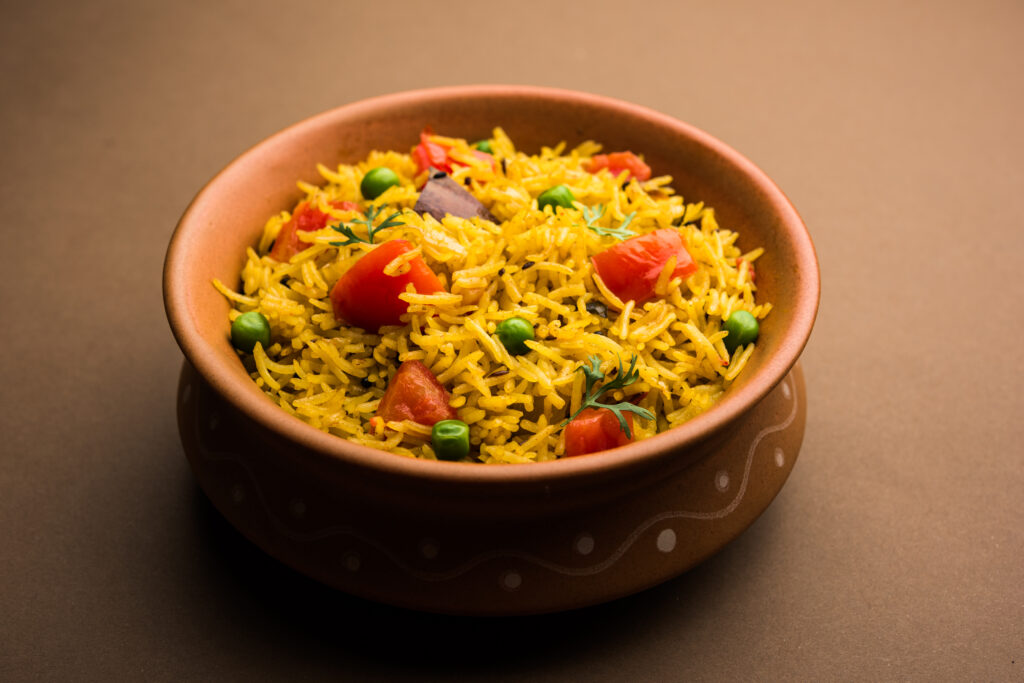
A raw 1121 grain measuring 7.2mm or above will nearly double in length under dum conditions. This produces the slender, needle-like appearance that defines premium biryani presentation. The elongation happens vertically: the grain grows long, not wide. Grains that expand horizontally produce a visual result that looks over-hydrated and heavy on the plate.
Grain uniformity matters as much as length. A batch containing mixed grain sizes cooks unevenly, because smaller and broken pieces absorb water at a faster rate than whole long grains. The result is patches of mushy rice alongside properly cooked grains in the same pot.
Amylose Content
1121 Basmati sits at the higher end of the amylose content range, around 22 to 25 percent. Amylose is the starch molecule that forms straight chains during cooking, creating firm, separate grains. Lower amylose varieties form branched starch chains that produce a soft, sticky texture. For biryani where grain separation is a core quality marker, high amylose is a structural requirement.
The Fragrance Compound
The distinctive aroma of Basmati comes from a single compound: 2-acetyl-1-pyrroline. Authentic 1121 Basmati from the Indo-Gangetic plains carries this compound in higher concentrations than any other commercially available rice variety. During dum cooking, the compound infuses every layer of the biryani from the inside outward. When the seal breaks at the table, what the diner smells first is this compound releasing from thousands of grain surfaces simultaneously. It is not a subtle effect. It is the reason a great biryani announces itself from three metres away.
Sella vs Steam Basmati: Understanding the Processing Difference
This is the decision that separates professional procurement from casual buying. Both are 1121 Basmati. The processing type changes how the grain behaves under heat.
What Sella Processing Does
Sella (parboiled) rice is steamed in its husk under pressure before milling. This forces soluble starch and nutrients from the outer layers into the grain interior, producing three outcomes relevant to biryani production:
The grain becomes hard. A sella grain is significantly more resistant to overcooking than raw Basmati. This matters enormously in commercial kitchens where two batches are running simultaneously and the timing on the second pot slips by 10 minutes. Sella will hold. Raw Basmati will not.
The grain turns golden. The parboiling process changes the grain colour from white to a warm cream-gold. This gives biryani a natural visual warmth before any saffron colouring is added.
The grain stays separate. The internal starch reorganisation during parboiling means sella rice has minimal surface starch available to cause binding during cooking. The result in the pot is a clean separation between grains that requires no special handling to achieve.
Barkat Gold Rice is a 1121 Sella with a 7.25mm raw grain length. Non-sticky behaviour is a direct function of the parboiling process, not a marketing claim. It is available in 1kg, 5kg, 10kg, and 30kg packs. Barkat Magic Rice and Super Rice are the other Sella variants in the range, positioned at different quality tiers for buyers with different volume and pricing requirements.
What Steam Processing Does
Steam processing is gentler. The grain is steamed without the pressure parboiling phase, which means less starch migration and a softer grain structure. Steam rice stays white, retains more of its original fragrance profile, and cooks to a more delicate texture.
Barkat Mahek Rice and Sadabahar Rice are 1121 Steam variants. They suit kitchens where dum timing is precise, the recipe is fragrance-forward, and the cooking environment is controlled. Lucknowi biryani, built around subtlety, kewra water, and floral grain notes rather than heavy spice, is the natural match for a quality Steam Basmati.
For large-volume operations, catering kitchens, delivery-focused eateries, and any kitchen where cooking timing varies across batches, Sella is the correct choice.
Aging: The Procurement Factor Most Buyers Miss
Freshly harvested Basmati has a moisture content between 14 and 16 percent. The enzymes in a new-crop grain are still biologically active. When that grain is cooked, it absorbs water faster than its structure can handle, breaks more easily, and releases starch into the cooking water. The pot becomes cloudy. Grains stick. Cooking behaviour across the batch is inconsistent.
Properly aged Basmati, between 12 and 24 months under stable conditions, stabilises at around 12 percent moisture. The enzymatic activity drops. The starch granules inside the grain undergo a structural change that makes them more resilient to water absorption. The grain cooks evenly, elongates properly, and holds its shape through the dum phase.
The practical impact for a commercial kitchen: aged rice has predictable cooking behaviour. You can standardise timings, train kitchen staff to a specific method, and expect the same result batch after batch. Fresh stock rice introduces variability that no cooking technique fully compensates for.
Ask every potential supplier directly: what is the harvest date on this stock, and for how long has it been aged? A supplier who cannot answer that question is either aggregating from multiple undocumented sources, or selling fresh stock at premium pricing.
Regional Biryani Styles and the Right Grain for Each
Hyderabadi Kachchi Biryani
The kachchi method layers raw marinated meat directly with parboiled rice in the dum vessel. The grain enters the dum stage at 70 percent doneness and absorbs heavy fat, bone marrow liquid, and concentrated spice compounds during the final 25 to 30 minutes of sealed cooking.
The demands on the grain are significant. It must stay structurally intact through prolonged moisture exposure, absorb fat-soluble aromatic compounds across a large grain surface area, and finish cooking at the same rate as its neighbours.
For this reason, the best rice for Hyderabadi biryani is extra-long grain aged 1121 Sella Basmati with a broken grain percentage under 3 percent. The sella structure handles extended dum conditions. The long grain absorbs the saffron and fat compounds correctly. Low brokens ensure every grain in the pot finishes at the same time.
Lucknowi (Awadhi) Biryani
Lucknowi biryani prioritises fragrance and lightness over spice intensity. The pakki method, where meat and rice are cooked separately before layering, means the grain spends less time absorbing from the meat base. Aroma carries more of the dish’s identity here than spice saturation.
A quality 1121 Steam Basmati with a clean, floral aroma profile is the correct grain for this style. The white colour and softer texture suit the aesthetic of Lucknowi cooking. Barkat Mahek Rice or Sadabahar Rice are appropriate options from the range.
Kolkata Biryani
Kolkata biryani uses a milder masala and famously includes whole potato, which changes the moisture balance in the pot. The rice needs a silky, smooth mouthfeel rather than a firm, separate character. Either a well-aged Sella or premium Steam Basmati performs well here. The priority is low brokens and consistent grain length to ensure even cooking across the full dum cycle.
South Indian Biryani (Dindigul, Malabar)
Dindigul biryani uses Seeraga Samba rice. Malabar biryani uses Jeerakasala. These are entirely different grains suited to coconut-based and fresh-herb-heavy masalas. They are not substitutes for Basmati and Basmati is not a substitute for them. If you are producing either of these regional styles commercially, the grain selection is a separate conversation from the Basmati discussion in this guide.
How to Cook Biryani Rice Correctly: Step by Step
Even the right grain produces a poor result with the wrong handling. These are the steps that produce consistent results in a professional kitchen.
Step 1: Rinse Thoroughly
Rinse the rice three to four times in cold water until the water runs clear. This removes surface starch that would dissolve into the cooking water and cause grains to bind. For Sella rice, the water clears quickly because parboiling has already driven most surface starch into the grain interior. For Steam or raw Basmati, rinse until you see no further cloudiness in the water.
Step 2: Soak for 30 Minutes
Soak the rice in cold water for 30 minutes. Soaking allows the grain to hydrate gradually from the outside inward, which produces even elongation during cooking. Do not soak beyond 45 minutes. Extended soaking begins to leach the aromatic compounds from the grain surface, which reduces the fragrance in the finished biryani.
Step 3: Par-Cook to 70 Percent in Spiced Water
Bring a large pot of water to a full rolling boil. Use 1 litre of water per 100 grams of rice to give the grains room to move freely. Salt the water generously; it should taste seasoned. Add whole spices: 2 bay leaves, 4 green cardamom pods, 3 cloves, one 2-inch cinnamon stick, and a teaspoon of ghee.
Add the soaked and drained rice. Cook on a high flame. For 1121 Sella, the par-cooking stage typically takes 8 to 10 minutes from when the rice enters the boiling water. For Steam or raw Basmati, 6 to 8 minutes is usually sufficient. Test by pressing a grain between your thumb and forefinger. The grain should yield with firm resistance and show a small, white, partially cooked core at the centre. That is 70 percent doneness.
Drain immediately through a fine sieve and spread the rice on a flat surface or tray to release steam. Spreading prevents the grains from continuing to cook in residual heat.
Step 4: Layer and Seal for Dum
Layer the partially cooked rice over the prepared meat base in a heavy-bottomed handi or dum vessel. Add saffron-infused warm milk or water across the top layer, followed by fried onions (birista), fresh mint, and a drizzle of ghee.
Seal the pot tightly. A traditional dough seal is most effective for a complete moisture lock. A tight lid wrapped with foil also works for high-volume batches.
Cook on a very low flame for 20 to 25 minutes. Place a tawa (flat iron plate) under the vessel if the stove produces uneven heat. The goal is gentle, even steam circulation through the layered pot. High heat during dum scorches the bottom layer and produces a hard, flavourless crust rather than the soft, caramelised base (socarrat) that skilled cooks intend.
Step 5: Rest Before Opening
Rest the sealed pot for 8 to 10 minutes after the flame is turned off. The residual steam inside continues to distribute heat and moisture evenly through the layers. Opening the pot immediately releases this steam and can cause the top layer of grains to dry out.
Common Mistakes That Ruin the Rice
Stirring the rice after layering. Agitation collapses the grain structure built during par-cooking. Fold gently if you must move the rice at all.
Using too little water in the par-cook stage. The grains need space to move freely in the boiling stage. Crowded grains break against each other.
High heat during dum. A scorching base hardens the bottom layer and over-dries the grains in contact with the vessel wall.
Skipping the rest phase. Cutting the rest short releases steam prematurely and produces uneven moisture distribution across the pot.
Buying broken or mixed-size grain. No cooking technique compensates for a 10 percent broken grain batch. The broken pieces become paste before the whole grains are done.
Procurement Mistakes That Cost More Than the Rice
Ordering on price alone without confirming grain length. A 5 percent lower per-kg price on a grain measuring 6.5mm raw versus 7.2mm raw means a lower cooked yield per kilogram and a visually inferior plate. The saving disappears at the yield calculation stage.
Signing a long-term contract after one sample delivery. Suppliers manage their best stock carefully during the sampling phase. The representative quality of a supplier is visible in the third and fourth delivery, not the first. Request samples from two separate production batches before committing to a volume agreement.
Ignoring aging status on fresh-crop stock. Rice suppliers in India are under commercial pressure to move new-crop stock quickly. A supplier who cannot confirm aging status, or who confirms stock is under 12 months old, is offering rice that will produce unpredictable results in a commercial kitchen.
Conflating sella and steam within the same order. A mixed order of Sella and Steam from the same supplier, stored in adjacent sacks without clear labelling, creates a kitchen problem when both types enter the par-cook stage together. They behave differently under heat. Label clearly and store separately.
Accepting high broken grain percentage as a cost trade-off. A 10 percent broken grain batch does not simply mean some grains look shorter on the plate. Broken grains release starch into the cooking water, which raises the overall stickiness of the batch above what the intact grains alone would produce. The quality degradation from high brokens is multiplicative rather than linear.
How Long Grain Basmati Travels the World
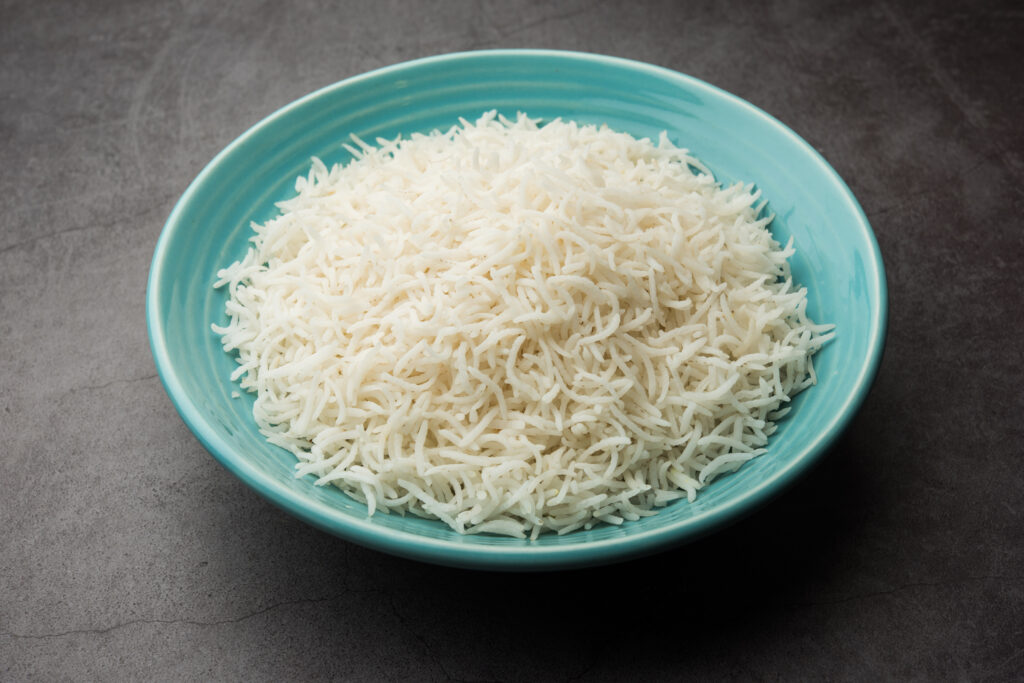
Biryani is an Indian dish in origin, but long grain Basmati is not an Indian-only ingredient. The same grain that goes into a Hyderabadi kachchi biryani shows up under different names across the Gulf, Central Asia, Pakistan, and Southeast Asia. For chefs and procurement buyers sourcing outside India, understanding these parallel traditions helps identify the right Barkat product for each application.
Pakistani Biryani
Pakistani biryani traditions run parallel to north Indian styles in terms of grain requirements. Karachi-style biryani uses 1121 long grain Basmati with a heavy spice profile and a drier final texture than many Indian biryanis. The grain specification is identical: aged 1121 Sella for volume production, minimum 7.2mm raw grain length, under 3 percent brokens.
Sindhi biryani is more sour and spice-forward than Hyderabadi, using tomato and dried plum in the base. The grain still needs a firm sella structure to handle the acidic cooking environment without breaking down.
Arab Gulf: Kabsa and Machboos
Kabsa is the national dish of Saudi Arabia. Machboos is the Gulf variant eaten across Kuwait, Bahrain, Qatar, and the UAE. Both are long grain Basmati rice dishes cooked directly in spiced meat broth with dried lime, cardamom, saffron, and cinnamon. The rice absorbs the entire cooking liquid and finishes as a single, unified pot rather than the layered dum structure of Indian biryani.
Because Kabsa cooks the rice in spiced broth from raw rather than par-cooking and layering, the grain requirement shifts slightly. The rice needs strong absorption capacity alongside structural integrity, since it must soak up a significant volume of liquid without turning soft. Aged 1121 Sella Basmati handles this correctly. The parboiled structure absorbs flavoured liquid without disintegrating, and the long grain maintains visual distinction on the platter even after full absorption cooking.
Mandi, popular in Yemen and across the Gulf, follows a similar principle but adds the dimension of slow-smoked meat. The rice cooks in the dripping fat and juices from the meat above, requiring a grain that can handle prolonged indirect heat exposure. Again, 1121 Sella is the correct specification.
Afghan Kabuli Pulao
Kabuli Pulao is the national dish of Afghanistan and is widely eaten across the Pakistani northwest. Long grain Basmati, specifically Sella, is the standard choice among both home cooks and restaurant kitchens. The rice cooks in a rich lamb or chicken stock, then steams with sweet carrots, raisins, and almonds. The Sella structure holds up through the stock-cooking phase and the secondary steam without clumping.
Multiple Afghan cooking sources confirm that Sella Basmati is preferred over raw Basmati for Kabuli Pulao precisely because the parboiled grain resists sticking when cooked in a fatty, flavoured liquid. The firmer texture also suits the dish’s character, which calls for distinct, separate grains that hold their shape under the weight of the garnish plated on top.
Iranian and Persian-Influenced Rice Dishes
Persian rice culture is distinct from the Indian dum tradition but still relies on long grain Basmati for its primary applications. Chelow, the foundational Persian steamed rice with a crispy base (tahdig), requires a long grain that elongates cleanly and separates after a two-stage cook involving soaking, parboiling, and final steaming with oil or butter at the base.
The grain requirements align closely with Indian biryani specifications: long grain, aged, minimal brokens, firm starch structure. Premium aged 1121 Basmati performs correctly in these applications.
What This Means for Procurement
The common thread across all these traditions is the same grain specification: long grain (7.2mm or above raw), aged 12 months or more, processed for a firm and separate cook, minimal broken grains.
The cooking method changes by country and tradition. The grain requirements remain consistent. Buyers sourcing Basmati for Middle Eastern, Afghan, Pakistani, or Persian food service operations can specify Barkat 1121 Sella with confidence that the grain suits their application.
For export enquiries and volume supply, visit barkatrice.in.
How to Evaluate a Rice Supplier Before You Commit
A great first delivery means nothing on its own. The supplier evaluation is about consistency across repeat orders, not performance on the batch where they know they are being assessed.
Raw grain inspection. Place grains on a dark surface. Look for uniform length, no chalky white opaque sections within the grain body (chalky grains break during cooking), and consistent colour across the batch. Measure the grain length and compare against what was stated in the supply agreement.
The soak test. Soak a sample for 30 minutes. The water should remain largely clear. Heavy cloudiness indicates excess surface starch, which signals either insufficient processing or adulteration with a lower-quality variety.
The boil test. Cook to 70 percent doneness. The cooked grains should be straight. Curved or bent grains signal internal stress from improper drying or aging. Curved grains will break during dum.
The repeat order test. Request a sample from a different stock batch before signing any long-term agreement. Grain length, cooking behaviour, and aroma should match the first sample closely. A supplier whose second sample diverges from the first is working from inconsistent stock sources.
The specification test. Ask for raw grain length in millimetres, broken grain percentage, processing type (Sella or Steam), and age of the current stock. A supplier who cannot answer all four questions is not the right long-term partner for a biryani operation that depends on consistent output.
Quick Reference: Specification Checklist for Biryani Rice Procurement
| Specification | Minimum Standard | Ideal Standard | Red Flag |
| Raw grain length | 7.0mm | 7.2mm or above | Below 6.5mm |
| Broken grain percentage | Under 5% | Under 3% | Above 8% |
| Processing type | Confirmed Sella or Steam | Sella for high-volume dum | Unconfirmed or “mixed” |
| Aging period | 12 months | 18 to 24 months | “Fresh harvest” or unknown |
| Moisture content | Under 13% | 12% | Above 14% |
| Pack size options | 10kg and 25kg | 30kg commercial packs | Retail packs only |
| Batch consistency | Within 5% variation | Within 2% variation | Visible variation between orders |
Any supplier who cannot populate this table with verified figures for their own product is not operating with the supply chain transparency that a commercial biryani kitchen requires.
How to Store Basmati Rice to Preserve Quality
Buying the right grain and then storing it incorrectly is a preventable and common problem in commercial kitchens.
Temperature and humidity control. Basmati rice absorbs moisture from the surrounding environment. Storage above 20 degrees Celsius with humidity above 60 percent accelerates moisture uptake, which softens the grain and reduces cooking predictability. In Gujarat and across coastal India, kitchen storage areas are often humid for months at a time. Rice stored in these conditions without sealed packaging will show degraded cooking performance within weeks.
Sealed containers only. Open bags or loosely rolled sacks allow both moisture absorption and aroma loss. The aromatic compounds that give Basmati its fragrance are volatile. They dissipate with air exposure. Rice stored in an open sack for four weeks smells and cooks noticeably different from rice stored in a sealed container over the same period.
Pest control. Rice stored in bulk is vulnerable to weevil infestation, particularly in warm, humid conditions. A 30kg commercial sack opened and partially used should be transferred to an airtight container or resealed tightly. First-in, first-out rotation across bulk stock prevents old rice from sitting at the back of a storeroom for months past its optimal use window.
Shelf life for commercial stock. Properly aged and correctly stored 1121 Sella Basmati can be held for 18 to 24 months from purchase without significant quality degradation. Steam Basmati is slightly more fragile due to its softer starch structure; 12 to 18 months is a more conservative target for commercial stock. These figures assume sealed packaging and a cool, dry storage environment.
For operations running high weekly volumes, the practical shelf life is less of a concern than consistent reorder timing. Ordering to a predictable schedule from a consistent supplier eliminates the variable of stock age at point of use.
The Per-Plate Cost Calculation Most Buyers Get Wrong
A 10kg bag of premium 1121 Sella Basmati with a 2.0 elongation ratio yields approximately 28 to 30kg of cooked rice. A 10kg bag of a shorter-grain variety at a lower per-kg price with a 1.5 elongation ratio yields approximately 21 to 23kg of cooked rice. The apparent per-kg saving on procurement produces a higher per-portion cost of rice.
For a restaurant serving 200 portions of biryani per service, this difference is material. The rice component of each plate costs more from the “cheaper” supplier, while the plate presentation suffers from a shorter, less elongated grain.
Negotiate on price only after grain length, broken percentage, processing type, and aging status are confirmed. Specification first, pricing second.
Why Barkat Rice for Commercial Biryani Supply
Barkat has operated from Surat, Gujarat since 1989, over 35 years in the rice supply chain. The range covers both 1121 Sella and 1121 Steam Basmati across six product variants, with commercial 30kg packs available for restaurant and distributor supply.
The Sella range (Gold Rice, Magic Rice, Super Rice) is specifically positioned for high-volume professional biryani production where batch consistency and overcook tolerance are operational requirements. The Steam range (Mahek Rice, Sadabahar Rice) suits fragrance-forward, precision-cooked applications.
For bulk enquiries, product specifications, and sample requests, visit barkatrice.in.
Frequently Asked Questions
What is the best rice for biryani in India for restaurant use?
1121 Sella Basmati is the standard choice for professional kitchens producing biryani at volume. Firm grain structure, non-sticky behaviour, and tolerance for imprecise dum timing make it the most operationally reliable grain. Barkat Gold Rice (1121 Sella, 7.25mm, 30kg commercial packs) is positioned directly for this use case.
What is the correct water ratio for par-cooking biryani rice?
Use 1 litre of water per 100 grams of rice during the par-cooking stage. This is a much higher ratio than regular rice cooking because the grain needs room to move freely without breaking. The water should be salted and brought to a full rolling boil before the rice is added.
How do I know when biryani rice has reached 70 percent doneness?
Press a grain between thumb and forefinger. The grain should yield with firm resistance and show a small white partially cooked core at the centre. If the grain crushes completely, it is overcooked for biryani purposes.
Is sella rice or raw basmati better for biryani?
For commercial kitchens and high-volume dum biryani, sella is the better choice. It tolerates timing variation, holds its structure through extended dum conditions, and produces consistent results across large batch sizes. Raw Basmati rewards careful handling but punishes any overcooking.
What broken grain percentage should I specify for biryani rice?
Specify a maximum of 3 percent broken grains in any biryani rice supply agreement. Higher broken content produces uneven cooking texture, visible plate presentation problems, and wasted procurement cost, since broken grains yield less usable cooked rice per kilogram.
How important is aging for biryani rice quality?
Critical. Freshly harvested rice has high moisture content and unpredictable cooking behaviour. Rice aged for 12 months or more has lower moisture, more resilient starch structure, deeper fragrance, and consistent cooking behaviour across the batch. For any standardised biryani production, aging status is a non-negotiable specification.
Which biryani style uses which rice variety?
Hyderabadi and Lucknowi biryani use long grain 1121 Basmati (Sella for Hyderabadi, Steam for Lucknowi). Kolkata biryani uses aged Basmati of either type. Dindigul biryani uses Seeraga Samba. Malabar biryani uses Jeerakasala. These are distinct grains for distinct styles.